
Pikabuu: Home Guide and Walkthrough
This route helps you move through Rian and Febi’s house without pretending that community-observed steps are official developer instructions. Read the spoiler-light roadmap first; open the ending guide only when you are ready for the final reveals.
Before you enter the house
Pikabuu: Home is a short single-player psychological-horror game by JoyKeratif. It follows married couple Rian and Febi after they buy a suspiciously cheap dream home. The story switches between their perspectives, so an ordinary domestic detail can carry a different meaning when you see it again.
The Steam build is Windows-only in its published requirements. The official itch page also provides a free demo, and Google Play lists an Android release. Use the demo if you need to test the tone or basic performance before buying the complete PC version.
- Play with sound on, but set a comfortable volume before the tension rises.
- Read every current objective before searching distant rooms.
- Recheck the kitchen, bathroom, motorcycle, and utility controls when an everyday task stalls.
- Treat ending details below as spoilers; there are exactly two endings.
Spoiler-light opening route
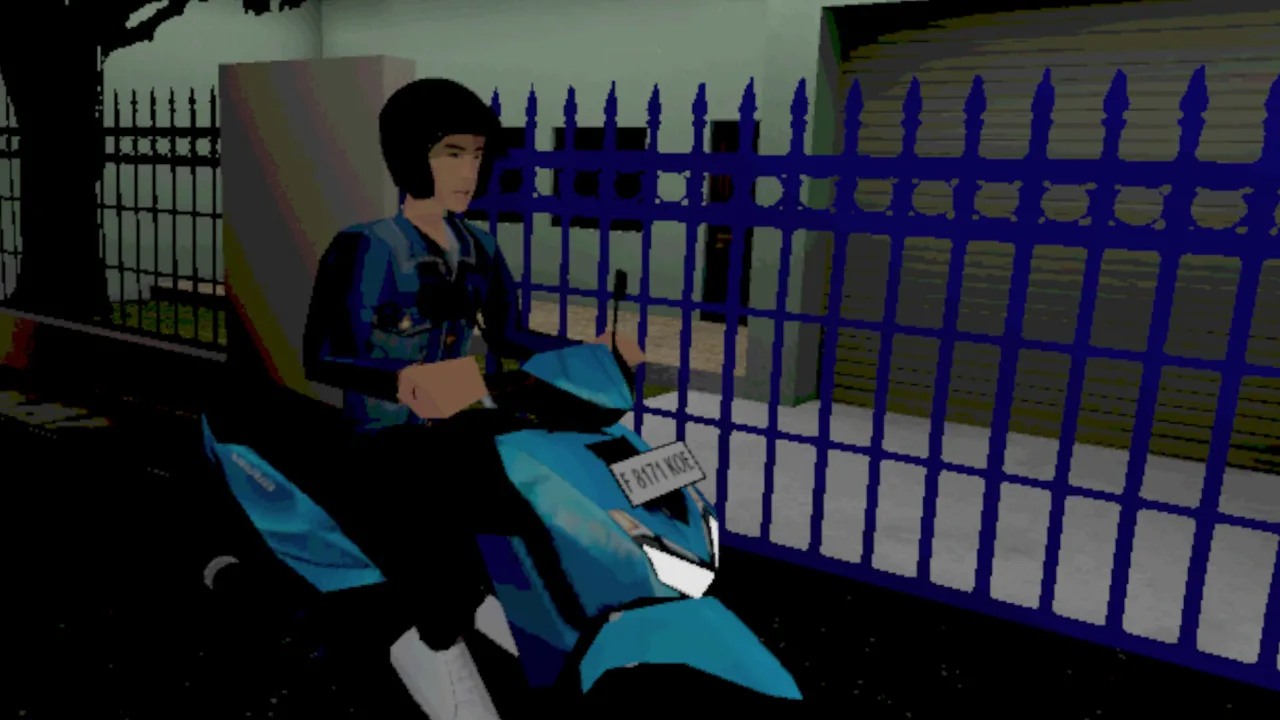
The opening uses small household errands to teach the layout. Follow the active prompt, inspect the nearest practical object, and return to the character or doorway that advanced the previous scene. Pikabuu: Home is not designed like an open-world scavenger hunt; most objectives refer to a familiar part of the house or the motorcycle outside.
Community-observed footage shows objectives involving the motorcycle, food, a bathroom visit, gas from the kitchen, and the main water valve. These observations help identify likely interaction zones, but the checked footage had no usable captions. This guide therefore avoids invented dialogue, item labels, and exact button sequences.
What to check when progress stops
Start with the room named or implied by the objective. Sweep interactable surfaces at normal walking speed, then revisit the last person or threshold. If the task mentions water, inspect the main valve rather than every tap. If it mentions fuel or food, check the kitchen and motorcycle areas before searching bedrooms.
If an interaction seems unavailable, finish the current conversation or animation and approach again. Restarting immediately can cost more time than letting the scene settle. For a technical problem, compare the official PC requirements and try the current demo build instead of downloading an unofficial “fixed” copy.
- Read the objective again and identify its ordinary household meaning.
- Check the nearest room and the last transition point.
- Wait for dialogue or animation to finish before interacting again.
- Use the official demo to separate a hardware issue from a navigation issue.
Why the perspective switch matters
Rian and Febi are not interchangeable cameras. The official description explicitly frames the story through both perspectives, inviting you to compare what each person understands about the house, their relationship, and the events around them. When control changes, revisit assumptions rather than treating the second section as a simple repeat.
The most useful notes are concrete: who is present, what task is active, which room changed, and what information one spouse has that the other does not. Those observations prepare you for the two ending paths without forcing an unsupported lore theory onto the game.
Quick answers
Is Pikabuu: Home difficult?+
The game is story-led and uses direct household objectives. Most stalls are solved by rereading the prompt and checking the nearest relevant room or utility control.
How many endings are in Pikabuu: Home?+
The official Steam and Google Play descriptions state that there are two endings.
Does this walkthrough reveal the endings?+
The main roadmap stays spoiler-light. The separate endings page discusses the closing sequence and interpretation.
Claims on this page map to S01, S02, S03, S06 in the source ledger. Facts were checked for Pikabuu: Home on 31 October 2026.
Open the source ledger →